



For research use only
| Cat No. | ABC-TC1313 |
| Product Type | Human Leukemia Cell Lines |
| Species | Human |
| Growth Conditions | 37 ℃, 5% CO2 |
| Disease | Acute Megakaryoblastic Leukemia |
| Product Code | M-07E; M-O7e; M07-e; M07e; Mo7e; MO7e; M07E; MO7E |
M-07e human acute megakaryoblastic leukemia subline depends on IL-3 or GM-CSF for growth, responds to diverse cytokines, and is non-tumorigenic in models.
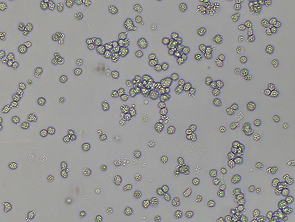
The M-07e (also commonly abbreviated as M07e) cell line is a human megakaryoblastic leukemia cell line derived from the peripheral blood of a 6-month-old Caucasian female patient with acute megakaryoblastic leukemia (AML M7), a rare subtype of acute myeloid leukemia (AML, FAB M7). These suspension cells exhibit lymphoblastoid morphology and are dependent on granulocyte-macrophage colony-stimulating factor (GM-CSF) or interleukin-3 (IL-3) for proliferation. These cells exhibit responsiveness to a wide range of cytokines, encompassing GM-CSF, interferons (IFNs), interleukins (ILs), nerve growth factor (NGF), stem cell factor (SCF), tumor necrosis factor-α (TNF-α), and thrombopoietin (TPO). Cytogenetically, they present with a near-diploid karyotype and carry trisomy 19 and deletion 13q, frequently found in pediatric AML. M-07e cells are not tumorigenic in immunodeficient mice but serve as a reliable in vitro model for megakaryocytic differentiation and cytokine response studies
| Product Code | M-07E; M-O7e; M07-e; M07e; Mo7e; MO7e; M07E; MO7E |
| Species | Human |
| Cat.No | ABC-TC1313 |
| Product Category | Tumor Cell Lines |
| Size/Quantity | 1 vial |
| Shipping Info | Dry Ice |
| Growth Conditions | 37 ℃, 5% CO2 |
| Disease | Acute Megakaryoblastic Leukemia |
| Biosafety Level | 1 |
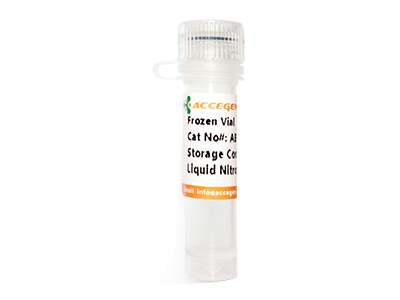
| Storage | Liquid Nitrogen |
| Product Type | Human Leukemia Cell Lines |
M-07e cells are widely used to study cytokine-dependent leukemic cell growth, megakaryocytic differentiation, J AK/STAT signaling, and leukemia stem cell biology. They are used to explore megakaryocytopoiesis and thrombopoiesis, particularly in relation to the effect of Thrombopoietin (TPO) on platelet production. Moreover, these cells contribute to understanding how cytokines impact cell proliferation, including studying the biochemical properties of interleukin receptors and post-ligand signaling pathways.
When you publish your research, please cite our product as “AcceGen Biotech Cat.# XXX-0000”. In return, we’ll give you a $200 coupon. Simply click here and submit your paper’s PubMed ID (PMID).
M-07E cells should be cultured in RPMI 1640 medium supplemented with 10-20% fetal bovine serum (FBS), 2mM L-glutamine, and 1% penicillin-streptomycin. Additionally, the medium should be supplemented with 10ng/mL GM-CSF, IL-3, or EPO to support growth. The cells should be maintained at 37°C in a humidified atmosphere with 5% CO₂.
Frequency: Passaging should be done every 2-3 days when the cells reach a density of 2-3×10⁶ cells/mL.
Procedure: Gently resuspend the cells by pipetting up and down.Transfer a portion of the cell suspension to a new culture flask with fresh complete medium supplemented with the appropriate growth factors.
Maintain the recommended cell density by adjusting the split ratio accordingly (usually 1:3 to 1:5).
Cryopreservation: Harvest and centrifuge cells at 300×g for 5 minutes. Resuspend cells in freezing medium (90% FBS and 10% DMSO) at a density of 1-2×10⁶ cells/mL. Aliquot the cell suspension into cryovials and gradually cool to -80°C using a controlled-rate freezing container before transferring to liquid nitrogen for long-term storage.
Thawing: Quickly thaw cryovials in a 37°C water bath. Transfer the cell suspension to a centrifuge tube containing pre-warmed complete medium. Centrifuge at 300×g for 5 minutes to remove DMSO. Resuspend the cell pellet in fresh medium supplemented with the appropriate growth factors and seed into culture flasks.